

Table of Contents
- Why Skin Texture Changes and What You Can Actually Fix
- Build a Natural Skincare Routine for Textured Skin
- Skincare Ingredients for Rough Skin That Do the Work
- How Long Does It Take to Improve Skin Texture?
- Acne Scars and Uneven Skin Texture: What Helps and What Doesn't
- Sun Protection, Diet and Sleep: The Factors Most People Skip
- Common Mistakes That Keep Skin Texture Rough
- Conclusion: Small, Consistent Steps Beat Quick Fixes
- Frequently Asked Questions
Last Updated: October 7, 2026
Why Skin Texture Changes and What You Can Actually Fix
Skin texture changes because of slower cell turnover, a weakened skin barrier, sun damage, and hormonal shifts.
Learning how to improve skin texture naturally starts with one honest fact: texture is a surface problem with deeper causes. Research from the British Association of Dermatologists confirms that barrier health sits at the centre of most texture complaints.
Our blunt view: most people attack texture with harsh scrubs when their barrier is already struggling, which makes everything worse.
Here is what actually responds to home care:
- Roughness and dullness from dead skin cells
- Congestion and enlarged pore size from trapped oil
- Dehydration lines from a compromised lipid barrier
Deep acne scars and loss of skin elasticity are a different story. Those need clinical treatments, not a better moisturiser.
Build a Natural Skincare Routine for Textured Skin
A natural skincare routine for textured skin has three jobs: clean without stripping, exfoliate without scratching, and hydrate without clogging. Get those right and most surface roughness settles within weeks.
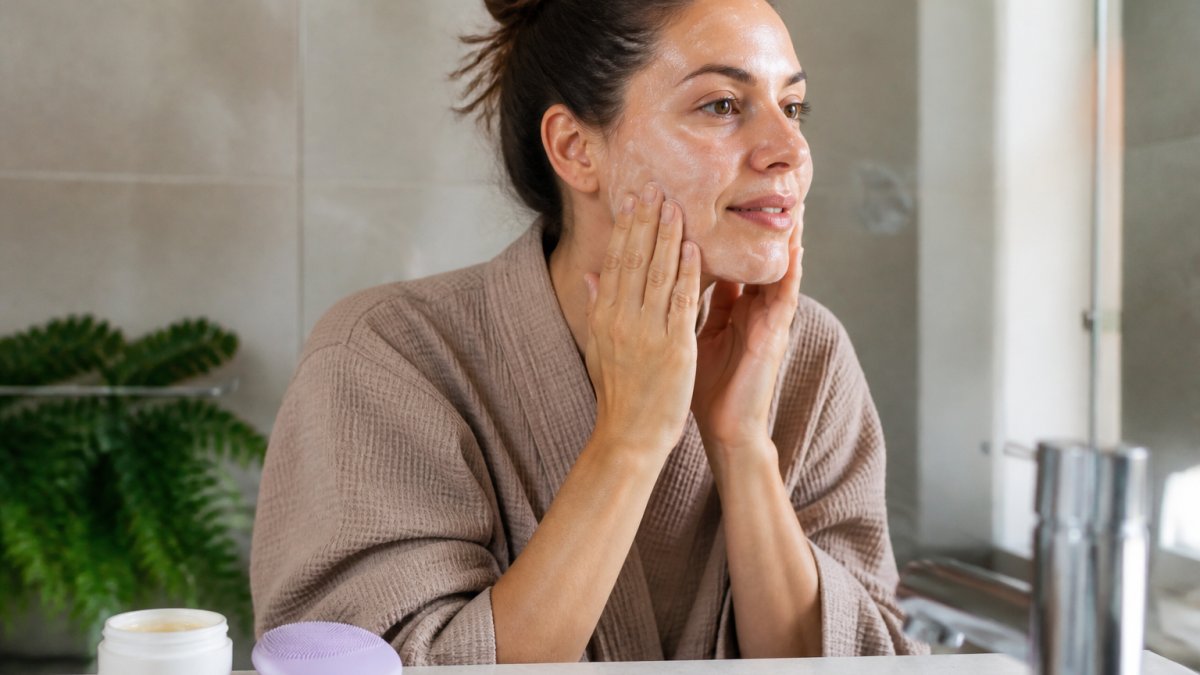
You do not need ten steps. You need three done properly, every day.
Step 1: Cleanse Without Stripping
Use a mild, non-foaming cleanser with lukewarm water. Hot water and harsh surfactants strip the lipid barrier, triggering inflammation and more roughness. That "squeaky clean" tight feeling is damage, not cleanliness.
Our GlowForm Sonic Facial Cleanser works well here. The soft silicone touchpoints lift oil and daily buildup more gently than hands alone, and the hygienic design resists bacteria better than traditional brushes.
Step 2: Exfoliate Gently, Two to Three Times a Week
Chemical exfoliation beats physical scrubs for most people. Mild acids dissolve the bonds holding dead skin cells together: lactic acid suits dry skin, salicylic acid suits congestion. Physical scrubs with jagged particles cause micro-tears and inflammation, especially on sensitive skin.
Start at twice a week. Build to three if your skin tolerates it.
Step 3: Hydrate and Seal the Barrier
Apply a hydrating serum to damp skin, then seal it with a balm or cream. Look for hyaluronic acid to draw in water, then ceramides and squalane to hold it there.
Our BarrierForm Skin Repair & Glow Balm combines petrolatum, squalane, ceramides and vitamin E. It locks in moisture, reduces water loss and calms sensitised skin, especially useful after exfoliation or aesthetic treatments.

Skincare Ingredients for Rough Skin That Do the Work
Skincare ingredients for rough skin fall into four groups: exfoliants, hydrators, antioxidants and barrier repairers.
Here is how they compare:
| Ingredient | What It Does | Best For | When to Use |
|---|---|---|---|
| Hyaluronic acid | Draws water into skin | Dehydration lines | Morning and night |
| Niacinamide | Calms inflammation, evens tone | Pore size, redness | Morning |
| Vitamin C | Antioxidant, supports collagen | Dullness, pigmentation | Morning |
| Ferulic acid | Stabilises vitamin C | Antioxidant boost | With vitamin C |
| Ceramides | Rebuilds lipid barrier | Dry, compromised skin | Night |
Antioxidants like vitamin C and ferulic acid protect against environmental stress that breaks down collagen over time.
Niacinamide is the quiet workhorse. It supports the skin barrier, reduces inflammation and helps refine pore size with consistent use.
What most guides miss is that ingredients need a healthy barrier to work.
How Long Does It Take to Improve Skin Texture?
Most people see a real change in skin texture within four to six weeks of consistent care.
Skin cells renew roughly every 28 days in younger skin, and slower as you age. That cycle sets the pace, anyone promising overnight results is selling you something.
A realistic timeline:
- Weeks 1-2: Skin feels calmer and more hydrated
- Weeks 3-6: Surface roughness softens, makeup sits better
- Months 2-3: Tone looks more even, pores appear smaller
Consistency matters more than intensity. Three gentle steps daily beat one aggressive treatment weekly.
Acne Scars and Uneven Skin Texture: What Helps and What Doesn't
Acne scars and uneven skin texture need a different plan from general roughness. Work out which type of mark you have first, because the treatment that helps one can do nothing for another, or make it worse.
Identify What You Are Looking At
- Post-inflammatory erythema (PIE): flat pink or red marks left after a spot heals. Caused by dilated capillaries and inflammation, not lost tissue.
- Post-inflammatory hyperpigmentation (PIH): flat brown marks, more common in medium to deep skin tones. Caused by excess melanin deposited during healing.
- Atrophic scars: pitted or depressed areas where collagen was lost. Ice-pick, boxcar and rolling are the three common shapes.
PIE and PIH are pigment and vascular problems, they fade with time and the right topicals. Atrophic and hypertrophic scars are structural. No moisturiser, serum or balm will fill a pit or flatten a ridge, and any brand claiming otherwise is overselling.
What Genuinely Helps at Home
- Daily broad-spectrum sunscreen, SPF 30 or higher. This is the highest-value step. UV darkens PIH and PIE and slows healing. Without it, everything else is undermined.
- Niacinamide to calm inflammation and support the barrier while marks settle.
- Vitamin C in the morning to interrupt excess melanin production and even tone over months, not days.
What Does Not Help
- Harsh physical scrubs, which cause micro-tears and inflammation.
- Picking, squeezing and over-treating active spots, this is how most atrophic scars are made in the first place.
- Layering strong acids, retinoids and vitamin C at once on scarred or sensitised skin.
Clinical Options Worth Discussing
For pitted or raised scarring, home care is a support act, not the main event. A practitioner will assess scar type, skin tone and how recently the acne settled before recommending anything. Common options include:
BarrierForm Skin Repair & Glow Balm →
- Microneedling (collagen induction therapy): fine needles create controlled micro-injuries that trigger collagen remodelling. Typically three to six sessions spaced four to six weeks apart, with a few days of redness afterwards.
- Chemical peels at clinical strength: deeper peels than anything sold for home use, chosen to match skin tone and scar type. Downtime ranges from a day to a week depending on depth.
- Laser and light therapies: used for both vascular redness and resurfacing, with settings tailored to skin tone to reduce the risk of pigment changes.
People often expect one session to fix years of scarring. Realistically, structural change takes a course of treatments plus three to six months of healing, and results are improvement rather than erasure. Anyone promising a single-session cure is worth walking away from.
The Order That Works
- Get active acne under control first. Treating scars on skin that is still breaking out wastes money and risks new marks.
- Commit to daily sunscreen and a simple barrier-friendly routine for at least eight weeks.
- Then discuss clinical options with a qualified practitioner, and keep the home routine going alongside treatment, not instead of it.
Our CellForm NAD+ Glow Pen supports skin repair from within, combining NAD+ and copper peptide in a daily pen. It is a wellness support, not a scar treatment.

Sun Protection, Diet and Sleep: The Factors Most People Skip
Most guides on skin texture stop at the bathroom shelf. But skin is an organ, and what you eat, how you sleep and how your hormones move through the month all show up on its surface, often where the biggest gains hide.
Sun Protection: The Non-Negotiable
UV exposure breaks down collagen and elastin, drives pigmentation and thickens the outer layer of skin over time. No serum undoes that. According to the NHS guidance on sunscreen and sun safety, you should use a sunscreen with at least SPF 30 and reapply every two hours outdoors.
Practical points most people get wrong:
- Cloudy days still count. Up to around 80% of UV can pass through light cloud.
- Winter still counts. UVA, the wavelength most linked to collagen breakdown, is present year-round and passes through glass.
- Quantity matters more than the number on the bottle. Most people apply far less than the amount used in testing, so real-world protection is lower than the label suggests. Two finger-lengths for the face and neck is a useful guide.
Diet: What You Eat Shows Up on Your Face
Skin is built and repaired from the inside. Two dietary patterns matter most.
High-sugar and high-refined-carbohydrate diets drive glycation, sugar molecules bind to collagen and make it stiff and less elastic, and can raise inflammation and oil production, showing up as dullness, congestion and slower healing.
Anti-inflammatory, nutrient-dense eating supports the skin's repair machinery:
- Oily fish (salmon, mackerel, sardines) for omega-3 fats that help calm inflammation.
- Colourful vegetables and fruit for vitamin C, which the body needs to build collagen, and for polyphenols that support the skin's antioxidant defences.
- Eggs, legumes and lean protein for the amino acids collagen is made from.
A useful rule: if a food is good for your heart, it is usually good for your skin. Extreme elimination diets and 'skin detoxes' are not.
Sleep: The Repair Window Most People Waste
Skin repair peaks overnight, and the circadian rhythm governs cell turnover and barrier recovery. A few nights of poor sleep reliably show up as dullness, more visible fine lines and slower healing from blemishes.
What actually helps:
- A consistent sleep and wake time, including at weekends, to keep the circadian rhythm steady.
- Seven to nine hours for most adults.
- A cool, dark room, overheating raises sweat and irritation, which is unhelpful for acne-prone skin.
Hormones: The Fluctuation Nobody Explains
Hormones influence oil production, inflammation and how quickly skin heals, which is why texture can shift noticeably across a cycle, during perimenopause and menopause, and during sustained stress.
- Around a period, rising androgens before bleeding can increase oil and congestion, particularly along the jaw and chin.
- During perimenopause and menopause, falling oestrogen is linked to drier, thinner skin and slower barrier recovery.
- Under chronic stress, cortisol can raise oil production and inflammation and slow healing.
None of this means your routine is failing, the plan may just need to flex: lighter, non-comedogenic products premenstrually; richer barrier support during drier hormonal phases; and more patience during stressful periods.
Putting It Together
Topicals do the surface work; sun protection, diet, sleep and hormonal awareness do the deeper work. The two compound. A simple routine plus consistent SPF, decent sleep and an anti-inflammatory plate will outperform an expensive routine built on neither.
Our TotalForm Collagen is unflavoured and easy to add to coffee or a smoothie. Each serving has 10,880mg of multi-source collagen peptides, plus hyaluronic acid, vitamin C and biotin to support skin from within.

Common Mistakes That Keep Skin Texture Rough
Over-exfoliating tops the list. More scrubbing does not mean smoother skin. It means a damaged barrier, more inflammation and rougher texture over time.
Other mistakes we see often:
- Skipping sunscreen on cloudy days, when UV still reaches skin
- Mixing too many actives at once instead of introducing one at a time
- Using hot water that strips the lipid barrier
DIY natural ingredients deserve caution too. Lemon juice, baking soda and sugar scrubs are popular online and damaging in practice. They disrupt skin pH and cause irritation. Natural does not mean safe for your face.
Conclusion: Small, Consistent Steps Beat Quick Fixes
Improving skin texture naturally is a long game, and consistency wins. Gentle cleansing, sensible exfoliation, real hydration and daily sun protection will do more than any single miracle product. If your barrier is compromised or you are recovering from an aesthetic treatment, our BarrierForm Skin Repair & Glow Balm supports repair with ceramides, squalane and vitamin E.
Frequently Asked Questions
How long does it take to improve skin texture?
Most people see early changes in smoothness within four to six weeks, because that is roughly how long it takes for cell turnover to bring fresher skin to the surface. Deeper concerns such as acne scars, pigmentation and loss of elasticity take longer, often three to six months of consistent care. Sun protection, hydration and sleep speed things up; skipping them slows progress even when your products are good.
Which skincare ingredients help with rough or bumpy skin?
Look for ingredients that support both exfoliation and barrier repair. Niacinamide calms inflammation and helps even skin tone, vitamin C and ferulic acid defend against environmental stress, and hyaluronic acid plus ceramides keep the lipid barrier intact so skin stays smooth rather than tight. Retinoids and gentle chemical exfoliants speed up cell turnover. Introduce one active at a time and give each four weeks before judging results.
Can natural skincare improve acne scars?
Natural skincare can soften the look of acne scars and improve overall texture, but it cannot rebuild deep indentations on its own. Topical vitamin C, niacinamide and consistent SPF help fade pigmentation and support collagen production. For pitted or rolling scars, in-clinic options such as microneedling make a bigger difference, with a barrier repair balm used afterwards to support recovery.
Can you rebuild collagen in your skin naturally?
You can support collagen production, though you cannot fully replace what's lost. Vitamin C is essential for collagen synthesis, and collagen supplements with added hyaluronic acid and biotin are widely used to support skin elasticity and hydration from within. Retinoids and microneedling stimulate collagen in the skin itself. Daily SPF matters most, because UV exposure breaks down collagen faster than any routine can rebuild it.
Texture problems rarely need a dramatic overhaul. They need a routine you will actually keep. Refine GlowLabs builds products for exactly that: the BarrierForm Skin Repair & Glow Balm to rebuild your barrier, the GlowForm Sonic Facial Cleanser for a gentler daily cleanse, and TotalForm Collagen for internal support. Shop The Glow Edit and start seeing smoother, calmer skin.